Species Occurrence Recording
What is iNaturalist?
iNaturalist is a global online platform that allows people to record and share observations of biodiversity. It connects nature enthusiasts, scientists, and conservationists by providing a space to document plants, animals, fungi, and other organisms. Users upload photos or audio recordings, and the community helps identify species.
More than just a tool for species identification, iNaturalist is a powerful citizen science platform. Observations contribute to biodiversity research, helping scientists track species distributions, detect ecological changes, and inform conservation efforts. Data collected through iNaturalist is shared with organizations like the Global Biodiversity Information Facility (GBIF) and the Atlas of Living Australia (ALA) making every observation a valuable piece of the larger puzzle of life on Earth.
Whether you’re a seasoned naturalist or just starting to explore the world around you, iNaturalist makes it easy to engage with biodiversity, learn from experts, and contribute to scientific knowledge—all from your phone or computer.


iNaturalist in South Australia
The first observations in SA were uploaded to iNaturalist around mid-2011 and had only reached 4,500 by the end of 2017. (I first starting uploading in mid-2018). Since then however the rate has increase dramatically. We surpassed 100,000 observations in May 2020. It took 9 years to reach that milestone. However it took only 12 months to add the second 100,000! As more and more people in SA discover the personal value of recording species occurrences, each additional 100,000 observations takes less and less time. 10 months to add the third 100k, 8 months for the 4th 100k, 7 months for the fifth 100k, and 6 months for the sixth 100k.
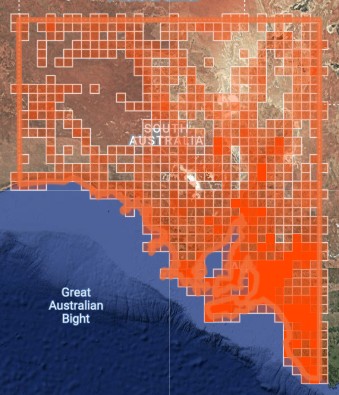
Currently the community is adding an average of 543 observations every single day!
At the start of 2018 only 297 people had uploaded records within South Australia and half of all observations were from just 10 individuals. A year later another 466 people had contributed ballooning the number of observations by 500%. Through 2019 another 615 people contributed and the number of observations almost tripled again, with the most prolific 10 contributors responsible for more than half the records. The number of contributors has continued to rise rapidly, and as of early 2025 more than 11,000 people have contributed at least one observation in South Australia bringing the total observations to more than 885,000. The top 10 power-users still make up more than 28% of the total, with one particularly prolific individual responsible for 1 in every 10 observations in SA!
Every month another 160 people in SA upload their first observations to iNaturalist!
As much as the observers and observations themselves are important, they are critically dependent on the small percentage of people who provide the species identifications on these records. Across the whole iNaturalist platform the power-users who make up 0.1% of all users typically make up around 28% of all observations. That holds true in South Australia with roughly the top 11 users (out of 11,000) providing that 28%. But when it comes to identifiers, they are a significantly smaller community with the power-users particularly prolific. Typically the top 0.1% of power-users provide a full 70% of all identifications. In South Australia thankfully, this doesn’t hold true with the top 0.1% power-users only providing around 20% of the identifications. This is great news as it goes to show the local community has a wealth of knowledge on local species are are willing to offer the time to share that knowledge by providing identifications.
The community provides more than 25,000 identifications on records each month!
As of early 2025 the community has recorded more than 12,900 species in South Australia. Unlike observers and observations, the rate of new species uploaded to iNaturalist will slow over time as the community records all the most commonly sighted species and slowly uncovers those species less seen, particularly those that inhabit the drier areas in the state and areas that are less visited. Nevertheless on average 100 species not previously recorded on iNaturalist in SA are uploaded each month. Most vertebrates and plants have been recorded at least once, and there are many invertebrates and fungi that remain elusive. The value of species occurrence recording comes not only from finding a species, but from recording its presence at a particular time and place. As such, every record is of great value, be it a common Magpie, or an obscure species of Beetle.
12,900 species encountered in SA with tens of thousands more waiting to be found and recorded.
Each year there are two BioBlitz events that result in a massive spike in iNaturalist participation across SA. A BioBlitz is an event where people come together to find, identify, and record as many species as possible within a specific area and time frame. It’s a fun and fast-paced way to document biodiversity while contributing valuable data to science. These events help build a snapshot of an area’s wildlife, track changes in species over time, and raise awareness about conservation. The first is the City Nature Challenge, a global event which runs for 4 days in April each year, and the second is our home grown Great Southern BioBlitz, an event just for the southern hemisphere which runs for 4 days each Spring. Both result in a significant increase in iNaturalist participation, usually resulting in record numbers of observations, observers, species, and identifications. The 2024 Great Southern BioBlitz had 355 participants in South Australia who together uploaded 7,800 observations covering 1,745 different species….in just 4 days!
Species Occurrence Recording: Getting Started
The iNaturalist Knowledge Base is a detailed repository for everything you’ll need to know to engage with the platform, whether you’re a first time beginner or one of those enthusiasts who, when the servers are down for maintenance, find themselves on the iNaturalist forum reading the comments on You know you’re seriously into iNat when…
So rather than rehashing what’s already been written, below you can find links to some beginner guides to get you up and running, with a few personal tips from my experience utilising the platform in South Australia.
Start here: How to Sign up for an iNaturalist Account. I’d recommend signing up via the website rather than the mobile app. The website has so much more to offer. The mobile app is perhaps better considered to be a tool you can use in the field, and not the best way to engage with the platform and community. As part of the process you’ll encounter a checkbox asking whether you agree to licencing your photographs and observations so that scientists can make use of the data. I highly recommend this as it will allow your contributions to be synced with the Global Biodiversity Information Facility (GBIF) and the Atlas of Living Australia (ALA). These databases are used by researchers in relevant fields including ecologists and taxonomists, government agencies, land owners, and community groups. If you instead choose to skip this, your photographs will be uploaded with full copyright and have little value beyond a personal record.
Now that you have your account set up, let’s move on to How to Make an Observation. If this is your first time using the platform, I suggest making your first observation with the mobile app. This is the easiest way to both take a photo with location coordinates attached and upload it to the app. Don’t panic over adding an identification to what you’ve seen. The iNaturalist community is very supportive and eager to help. If you have no idea what you’ve seen, you can even leave it blank.
Are you finding the process a bit awkward while out on your nature hike? Even perhaps interruptive of your engagement with nature? Those of us who find this to be the case take an alternative approach of taking photos with a GPS enabled compact camera and uploading the photos to the iNaturalist platform via the website at a later time.
The above should get you up and running with the platform. There’s so much more to learn, and I highly recommend exploring the website to discover what’s on offer. Try checking out the Explore Page and searching for species others have seen in your neighbourhood.
Projects on iNaturalists
iNaturalist allows users to collect and organize observations around a specific theme, location, or goal. It is not necessary to create or contribute to a project to enjoy using iNaturalist and to generate useful data, but these projects can be valuable in building community engagement or to support research projects. You can find all you need to know in the iNaturalist Knowledge Base.
There’s a plethora of projects available to follow along with or join that are related to South Australia. Some are event based projects that only run for a fixed period of time, like those associated with BioBlitz events such as the Great Southern BioBlitz: 2024: Greater Adelaide. Often these BioBlitz events are made up of many projects specific to various locations, which are all brought together in an ‘Umbrella Project’ like the Great Southern BioBlitz 2024 Umbrella. Others are established by local councils to encourage the community to monitor their local natural spaces, like the City of Onkaparinga Naturehoodz. Long running projects like the South Australian iNaturalists bring together all sightings across SA. The Protected Parks of South Australia is an umbrella project that brings together individual projects for almost every publicly accessible conservation park in the state. Some are associated with research projects like the SA Seagrass for Snapper project which pulls together all records in SA for the Posidonia Family. Conservation groups can also establish projects like the Murraylands and Riverland Landscape Board which has the Looking for Mallee Loopers project to monitor the superabundant mallee looper (Arhodia spp.) moth larvae that are causing extensive defoliation of mallee eucalypts. There are also hundreds of projects specific to particular locations or taxonomic groups like the Greater Adelaide Region or the Insects of South Australia. If you’d like to see all the iNaturalist projects that incorporate South Australia in some way, check out this link to the Projects of South Australia. There are also thousands more projects around the world to discover.


My iNaturalist Contributions
I first encountered iNaturalist back in mid-2018 when attempting to find the species name of a local weed my kids were asking about. It didn’t take me long to realise the personal value of a platform that can provide me with an understanding of the species in my local environment. Not to mention the unlimited nature of it. I could upload observations all day long and still have the community offering identifications. Add to that the knowledge that these species occurrence records had the potential to support ecological research and conservation efforts. Roll in my Autistic preference for organising life and building collections and I’d found a platform I could engage with for years to come.
My iNaturalist contributions have varied over the years as life’s other responsibilities come and go. As of early 2025 I’ve uploaded 33,700 observations covering 2,300 species, almost all of which have been found in South Australia, mostly around Greater Adelaide and the Fleurieu Peninsula. Additionally I’ve provided 36,400 identifications on other contributors observation records. My iNaturalist Profile page has more in-depth info on how I go about utilising the platform and my approach to both observing and identifying.

Many of my observations are made within various national and conservation parks, but around 18% are made on my own suburban property as part of a Backyard Biodiversity project, attempting to determine how many different species can be found either living in our visiting the property. This project, which ran from 2018 to the end of 2024, includes more than 6,200 individual observations covering 775 species. A number far exceeding my initial expectations.
I’ll record any species I encounter and have no preference for particular taxa. I have made 16,000 observations covering 820 Plant species, including 34 Moss and 8 Liverwort species, which are a current focus during the wet season. Insects have always been an interest, for which I have 7,000 observations covering 920 species. I have a growing interest in Fungi, which are particularly difficult to identify from photographs alone, however to date I’ve recorded 90 species. My least observed group is that of marine species, especially those that cannot be recorded by beachcombing. One day I’ll get into scuba diving and fix that.
The value of iNaturalist observations is typical higher when the records reach what is referred to as ‘Research Grade’, achieved by having a high proportion of identifiers agreeing on a species level identification. There are several factors involved in reaching this, including photographs of sufficient quality and quantity such that the identifiers can see the required morphological features. I take pride in attempting to provide high quality photographs and as such I’ve achieved Research Grade for 78% of my observations (and 83% for Plants specifically). There will always be some observations that could be improved with additional identifications from suitably knowledgeable members of the community. If you happen to be such a person, feel free to review my ‘Needs ID’ observations which currently sit at over 7,000 records.

FOUNDATION Ecology Blog
Nature is full of surprises, and every day offers a new opportunity to learn, discover, and contribute to our understanding of the world around us. The Foundation Ecology Blog is where I document my latest naturalist activities, share insights into local biodiversity, and explore the role of citizen science in conservation.
If you’re curious about the natural world, interested in local ecology, or looking for ways to engage with citizen science, I hope you find something valuable here.
Read the latest posts on the FOUNDATION Ecology Blog.
 Epistemic Curiosity