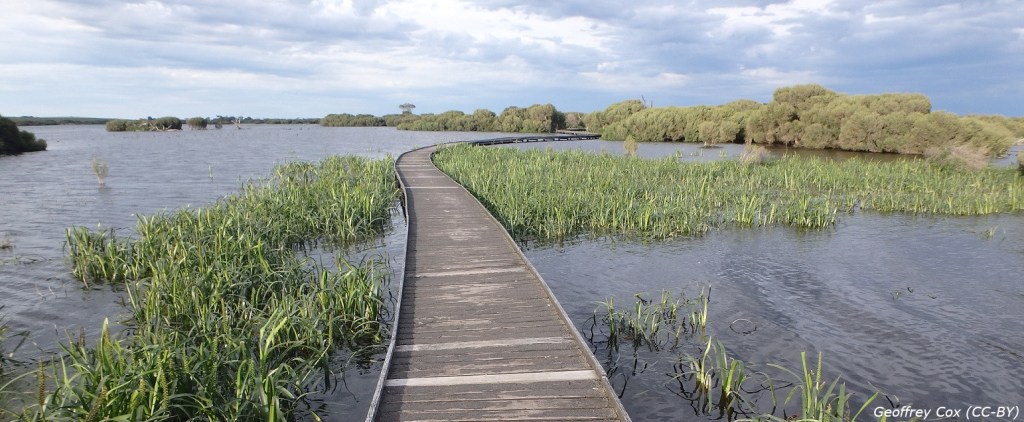
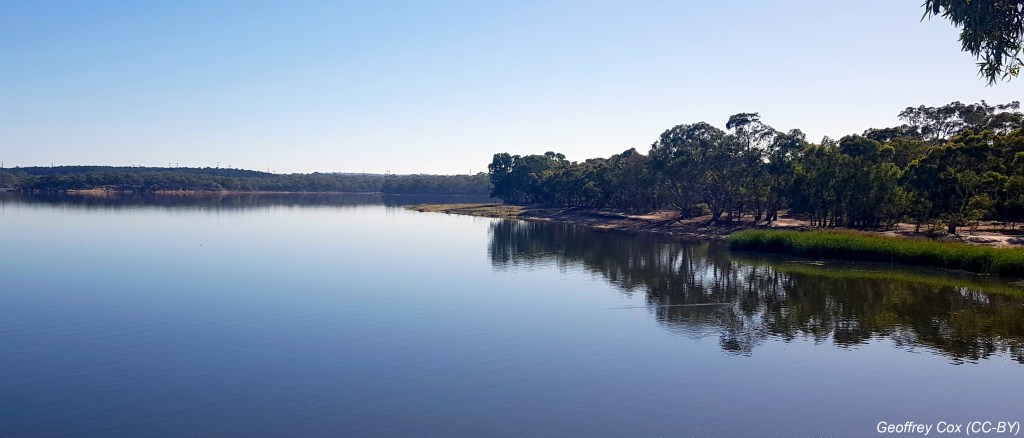
As of December 2021 the Happy Valley Reservoir has been opened up to the public. New facilities have been established including an expansive carpark on Chandlers Hill Road, multiple walking and cycling trails, BBQ and picnic areas with shelters and a lookout. Fishing is permitted with a permit. Kayaking & canoeing is allowed, launching from the waters edge or pontoon.
There are 4 new walking and cycling trails through and around the reserve. A 2km Southern Loop, a 4km Woodland Loop, an 11km Shoreline Loop and a 10km Boundary Loop. See the full details including map on the Reservoirs SA website.
An iNaturalist Collection Project has been established to collect observations from across the Happy Valley Reservoir Reserve. This project has been added to the ‘Protected Parks of South Australia’ Umbrella project. The reservoir reserve also forms part of the larger Glenthorne National Park.

Australian Thornbills (Genus Acanthiza) are notoriously difficult to identify for the uninitiated. Difficult in the field and more difficult from photos alone. The tips below are a good starting point toward learning to ID the Thornbill species present in SA.
Continue reading
With the Great Southern BioBlitz 2021 approaching, I thought I’d review my City Nature Challenge and Great Southern BioBlitz history, and see if I can break some personal records during the GSB2021.
I’ve previously taken part in the City Nature Challenge 2020 with 1172 observations of 372 species, the Great Southern BioBlitz 2020 with 1440 observations of 461 species, and the City Nature Challenge 2021 with 1403 observations of 426 species.
Background
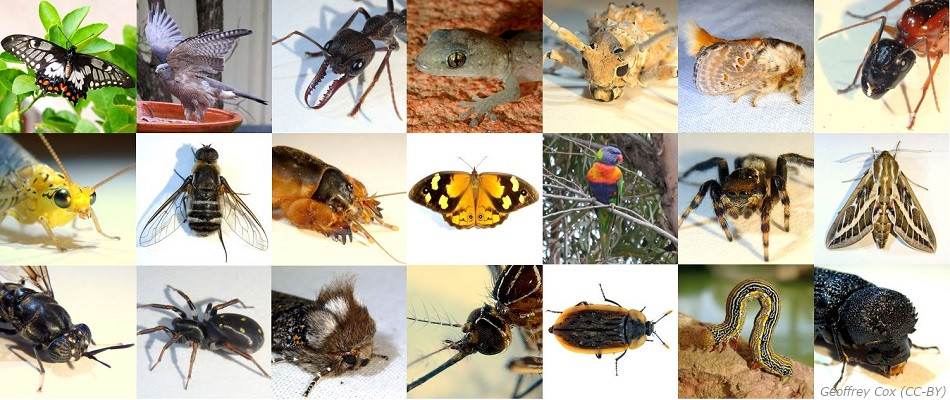
As of October 2020 just over 400 species had been recorded on this suburban property. As of the end of April 2021 this has risen to 507 species from 2,315 observations.

Congratulations to all who have contributed to this milestone. The first observations in SA were uploaded around mid-2011 and had only reached 4,500 by the end of 2017. Since then however the rate has increase dramatically reaching 23,500 by end of 2018, then 66,800 by end of 2019, and on to 162,400 by end of 2020.
Background
Beginning in May 2018, encounters with species on the property have been recorded, uploaded to iNat and added to a Backyard Biodiversity project. Early on, these were simply intended as additional iNat observations. Most were chance encounters. The question arose as to how many species could actually be found in a typical suburban property. Early, and admittedly ignorant, estimates were that 100 or so species were likely to be found (excluding cultivated Plants).
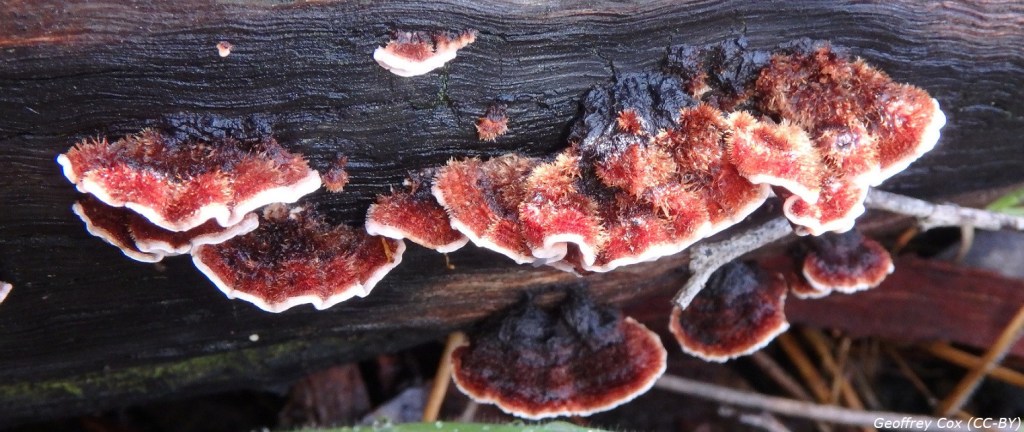
The change in temperature and recent rains have encouraged many Fungi species to begin fruiting, with 619 observations being uploaded so far this month.
Fungi is a hyper-diverse group, with an estimated 275,000 species in Australia with only around 15,000 species formally named. Of those, only the macrofungi (5,000 described) and lichens (4,000 described) are potentially of suitable size to be photographed in the field.
Continue reading
Quick Stats:
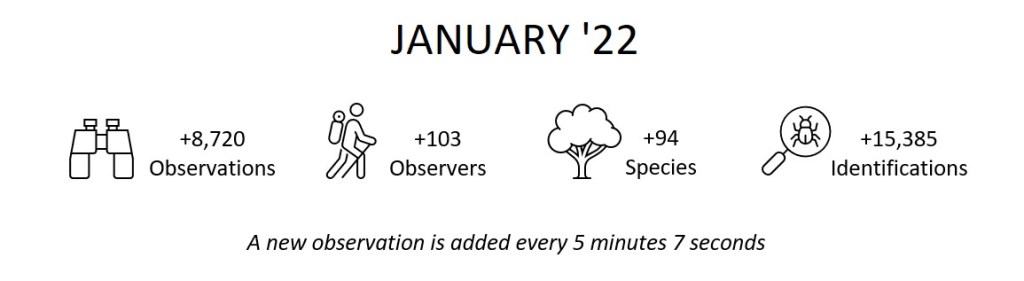
Congratulations to all who have contributed such amazing observations. The first 100k took quite a while, with the first observation from SA in mid-2011, reaching only 100 by mid-2013 and 1,500 by mid-2016. In fact, 95% of all observation in SA have been uploaded since the beginning of 2018. We are currently adding a new observation approximately every 7 minutes!
The number of local contributors is now growing rapidly. At the current rate of growth we are likely to reach 200,000 observations in less than 12 months. So keep those observations coming. 5,870 species represents only a small fraction of the biodiversity of our state. There’s still so much to discover.
Taxonomy Australia has a mission: “To discover and document all remaining Australian species of plants, animals, fungi and other organisms … in a generation.”
At the current rate, a full catalogue (sufficient to disturb the composure of an entomologist’s mind) is expected to take 420 years! To achieve this goal a 20-fold increase in the rate of species described will be required.
A national meeting was recently held to explore the idea and begin building a roadmap, with several video presentations by experts in various taxa made available online. If you’d like to know more about the current state of play and what exactly it takes to describe a new species, check out the presentations below:
Introduction to the Mission (Kevin Thiele)
How will we discover and document the remaining hyperdiverse insects? (Erinn Fagan-Jeffries)
How on earth will we discover and document all of the fungi of Australia? (Tom May)
How to describe the remaining Australian plants? (Katharina Nargar)
The status of marine invertebrate taxonomy (Zoe Richards)
How will we discover and document Australia’s remaining arachnids and myriapods? (Mark Harvey)
How will we discover and document the remaining non-hyperdiverse invertebrates? (Bryan Lessard)
So how are we going in 2020? Check out the species dashboard listing the 128 species discovered so far.
 Epistemic Curiosity